LAMBERT: I AM NOT LAMBERT
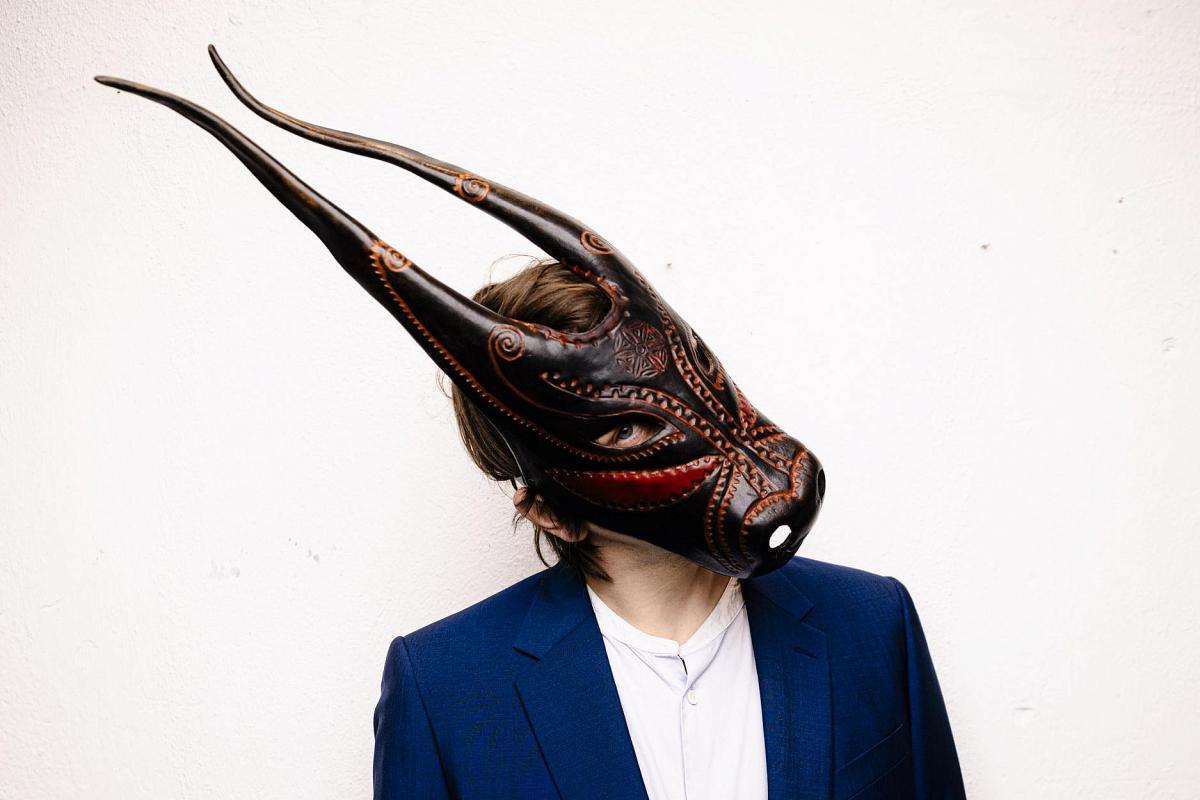
LAMBERT is back. Or maybe he never left. Maybe, indeed, he was never actually there in the first place. There’s no use enquiring, however. You’d have to track him down first. Anyway, perhaps you’d be asking the wrong person. Could you be sure that’s him in the Sardinian mask, not a cunning imposter? Wouldn’t you need to confirm what’s behind the disguise, and might you then find someone else? Moreover, does any of this ultimately matter when the facts speak for themselves? LAMBERT is back. He’s releasing a new album. He’s called it I AM NOT LAMBERT.
So, let’s start with that instead. I AM NOT LAMBERT is classic Lambert, indicative of the invention and versatility that, for these last dozen years, have earned sweeping praise for this Berlin-based pianist, composer and producer. At the same time, I AM NOT LAMBERT is very different, the first of his albums to feature significant vocals. “My music has always been s...
LAMBERT: I AM NOT LAMBERT
LAMBERT is back. Or maybe he never left. Maybe, indeed, he was never actually there in the first place. There’s no use enquiring, however. You’d have to track him down first. Anyway, perhaps you’d be asking the wrong person. Could you be sure that’s him in the Sardinian mask, not a cunning imposter? Wouldn’t you need to confirm what’s behind the disguise, and might you then find someone else? Moreover, does any of this ultimately matter when the facts speak for themselves? LAMBERT is back. He’s releasing a new album. He’s called it I AM NOT LAMBERT.
So, let’s start with that instead. I AM NOT LAMBERT is classic Lambert, indicative of the invention and versatility that, for these last dozen years, have earned sweeping praise for this Berlin-based pianist, composer and producer. At the same time, I AM NOT LAMBERT is very different, the first of his albums to feature significant vocals. “My music has always been song-oriented,” he says, “so it felt natural see if this works as well as I believed it would. Songs are a big part of what I listen to, so to present music like this is just me being... I don’t know... honest?”
In fact, I AM NOT LAMBERT begins with Lambert singing in sometimes Vocodered tongues amid ‘Spirit’’s gentle flutters. Fellow Berliner, Australian Kat Frankie lends hushed tones to the gossamer ‘So Unkind’, and old friend Dekker turns up too, layering harmonies over the soulful poise of ‘The Sum’ until moved to ardent, Prince-like testimony. There’s also Goodwin (Rob Goodwin of The Slow Show), bringing a weathered croon to the devastating ‘Hurts Like You’, an unconscious rekindling of the spirit at the heart of Lambchop’s Is A Woman. But none of these three is Lambert.
Nor are regular cohorts Daniel Schaub (guitars, bass, drums), Marie-Claire Schlameus (cello) and Ralph Heidel (saxophone, clarinet, flute). Together, they add soft-hued shading to tracks like the poignant ‘All At Once’, and Heidel is also featured upfront on the suave ‘The Garage’, while Schlameus plays a prominent, calming role on ‘Parthenope’, its piano’s top line inspired by Paolo Sorrentino’s recent film, its lower notes ticking like clockwork. Lambert even settles behind a drumkit, as he did in his youth, on ‘We’ll Be Safe Here’, ‘The Sum’, ‘The Garage’ and ‘The Chase’, which starts out like John Carpenter tangling with Debussy before taking a deft step sideways. Is this the Lambert we know?
“I AM NOT LAMBERT”, announces the artwork. “I am many,” the music replies. So, alongside hints of noughties enthusiasms (Bright Eyes, Fiona Apple, Jon Brion’s Eternal Sunshine... score) are further indications of his passion for jazz, lingering from long before Lambert was Lambert and a staple of the long-running podcast he hosts with musician Felix Weigt. ‘We’ll Be Safe Here’ showcases a nimble Rhodes, and ‘Gingerly’ combines chamber-like intimacy with fingers Oscar Peterson would envy. Round midnight, too, another old friend, Kenny Warren – no, he’s not Lambert – swings by to add trumpet to the languorous ‘You Don’t Like Me’, while ‘It Will Happen Either Way’ is as fragile as Chinese porcelain.
Like a maestro switching between major and minor, Lambert has been playing with ideas of identity for nine albums now, though this wasn’t his initial intention. To begin with, his mask merely derived from a wish to leave his past behind. “I didn’t want people to know anything about me,” he confesses of 2014’s self-titled debut. “I just wanted to clean the slate.” But his headwear developed into emblem and lure, coaxing people in. Lambert became ‘The Man In The Mask’, and, it turned out, not least in his dealings with the media, this suited him rather well.
“I had to talk about it a lot, especially about hiding, but I didn't mind at all,” he explains. “It was better than talking about my failures.” Such light-hearted comments became another trademark, although he contends that neither technique was defensive. “I don’t need protection,” he says with a straight face. “My music is great. I'm confident of that. It doesn't need to be serious to be good, and nor do I either. I don't see this as high culture, just songs.” Then he breaks cover. “Very good songs, of course,” he laughs.
To some, if unexpectedly, such flippancy has become a sign of authenticity, and this lack of pretension, interpreted as unwillingness to ‘play the game’, has also been considered refreshing. Lambert, it seemed, wasn’t hiding anything after all. If he told us his last solo album, Actually Good, was his score for a TV show – in which, had it not fallen apart during filming, he’d have starred as a grizzled, masked detective – who were we to contest this? We weren’t detectives either.
Yet still few could say who was genuinely behind that mask. Take it off and, even at his own shows, he was suddenly unrecognisable, only raising further questions. If Lambert was gone, could his music survive, and, furthermore, was it legitimately his if he wasn’t openly undercover? To find out, he started removing – if solely mid-show – what was now his uniform, and remarkably this made little difference. The headdress may have first caught public attention, but this dramatic liberation proved no more than a brief but amusing distraction. No one had bought tickets for the mask.
Only afterwards did he notice, mingling with gig-goers, how his unveiling affected fans. “When people could see my face while we chatted,” he recalls, “we had a different way of connecting.” It was like he’d left Lambert behind, and yet, at the same time, to punters that’s who he remained. It was becoming confusing, if only to him, and especially when he realised that, even as himself, he was nonetheless playing a part. To break the myth of authenticity, he’d taken it seriously, with repercussions inevitable.He was trapped in a hall of mirrors.
“When people tell me to be myself on social media, I really don’t understand,” he says, illustrating his point. “Why should I be forced to be myself because others are watching? But the algorithm wants to tell that story. I’m reminded of it every day. I want to play piano, while the industry tells me to spend time on Instagram promoting my album, promoting my concerts. That’s not authenticity.”
Fortunately, he reached a valuable conclusion. “What counts is to do what I've always done, to play with ideas whilst at the same time writing music, searching for pop where often there isn't so much. None of that other stuff is as important.” So here are the headlines: Lambert is back. On his new album’s cover he’s seen taking off his mask, but inside he’s still himself. It’s not Lambert being Lambert, nor Lambert not being Lambert Like much of his work, it’s the same, but different. In fact, it’s probably safe to say that I AM NOT LAMBERT is the most honest lie Lambert’s ever told....
Read more
Hide full description.
 Attend at Facebook
 Highlight
 Add to favorites